Call


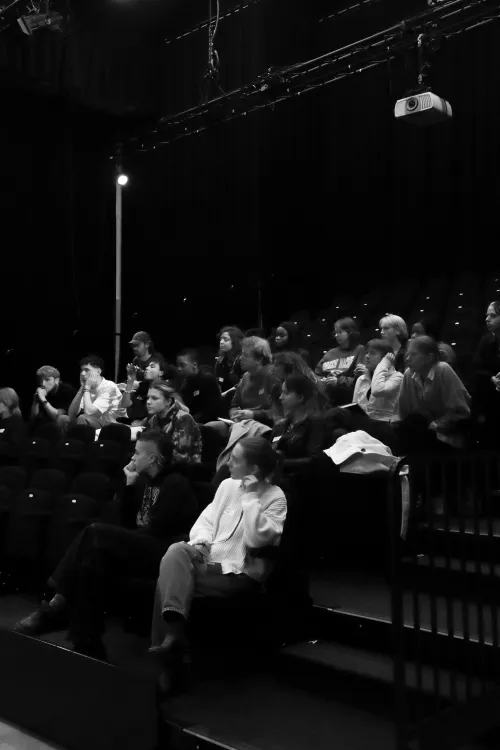
Last Thursday, Scherpsteller Warda El-Kaddouri delivered an online keynote for Pilar and deBuren. Afterward, she spoke with Daan Rovers and Carolina Maciel de França about diversity. Two terms came up repeatedly during this conversation: multiculturalism and superdiversity. Warda El-Kaddouri indicated that she preferred the latter, as she believes multiculturalism has taken on negative connotations in recent years. But what exactly is the difference between these two terms, and why did El-Kaddouri prefer superdiversity? In this blog post, VUB student Charlotte Moerman explains the concepts and their history. For this text, she drew on “Towards Multiculturalism? Changing Communities, Conditions, and Contexts of Diversity” (2010) by Steven Vertovec.
What is the difference between multiculturalism and superdiversity, and why does El-Kaddouri prefer superdiversity?
European multiculturalism has its origins in the latter half of the 19th century. Various countries faced new challenges due to the increasing influx of immigrants. During the second half of the 20th century—and in response to human rights movements—there was a call for measures that could effectively manage this ever-growing number of immigrants. Governments here and there introduced a new policy aimed at resolving these political, social, and public issues: multiculturalism. In public spaces, for example, space was set aside for ethnic minorities and their activities. As a result, other religions were now also permitted to build places of worship in the city. In education, curricula were developed that also addressed other religions, or extra classes were offered to children who spoke a different language at home. Awareness campaigns and government documents also had to be provided in multiple languages. In the early 1990s, multiculturalism reached its peak, and the term was, as it were, ubiquitous. But by the turn of the century, the tide turned: the effectiveness of multiculturalism was called into question, as discrimination and racism were still far from eradicated. In fact, right-wing politics made significant gains during this period, and ethnic minorities experienced inequality in the form of low incomes, high unemployment, low social mobility, and so on… Multiculturalism had therefore not really brought about any significant structural changes; while there was indeed greater tolerance, ethnic minorities still often lived in separate communities, attended separate schools, and were part of separate networks. Integration had failed, and multiculturalism was blamed for it.
Over the past twenty years, the number of immigrants has grown exponentially, and today we live in an even more diverse world. “More people are now moving from more places, through more places, to more places.” While migrants in the 1960s and 1970s came mainly from a relatively small number of countries, today’s immigrant flow consists of more diverse and less organized groups of people. Various variables can be cited here, such as country of origin, age, language, religion, educational level, and so on. The group of immigrants entering Belgium, for example, is super-diverse and therefore cannot simply be classified as a single distinct community with a single shared identity. This is what we mean by the term “superdiversity.” So how do we address this? This complex issue could not be addressed through the system of multiculturalism. In his publication, Vertovec discusses “post-multiculturalism.” This is a system that does not seek to separate different population groups but instead aims to integrate them. Various concepts of multiculturalism—such as tolerance and respect—were incorporated into this approach, but there is also an active effort to promote integration. For example, governments offer language classes, and newcomers are required to commit to participating in them. In this way, post-multiculturalism seeks to develop policies that aim to create a shared identity while also respecting differences.

Would you like to write a blog post for Pilar? Let us know at pilar@vub.be
Find out how to find us here
Read our Pilar house rules here
Find out here how to contact us